
What’s New in R: November 24, 2025
Welcome to this week’s edition of What’s New in R! This week, we’re featuring a deep dive into {ggplot2}’s geoms and stats, an announcement of a new book on spatial data visualization, and a comprehensive demo of AI features in Positron. Let’s dive in!
Exploring {ggplot2}’s Geoms and Stats
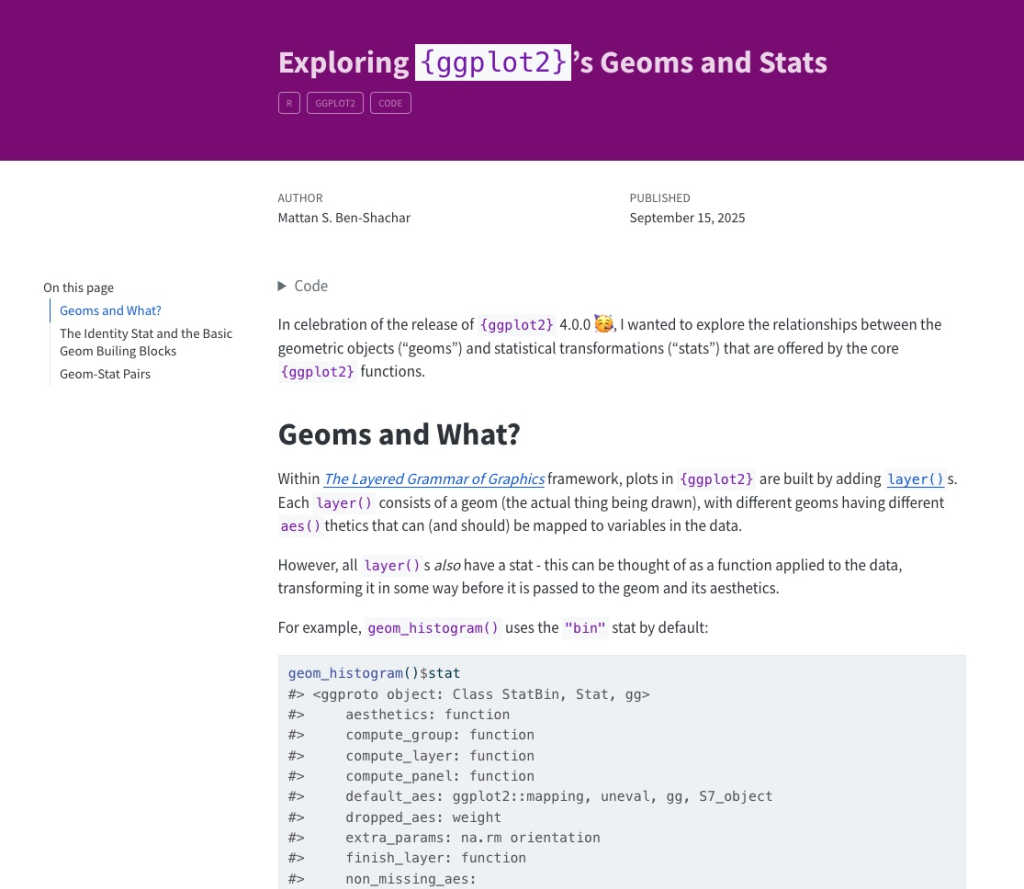
Mattan Ben-Shachar provides a thorough exploration of the relationship between geoms and stats in {ggplot2}, going well beyond the basics of stat = "identity" in bar charts. The post systematically catalogs all geom-stat pairs in {ggplot2}, explains how the identity stat works, and demonstrates how understanding these relationships is key to mastering the grammar of graphics. It’s an excellent resource for anyone looking to move beyond default settings and truly understand how {ggplot2} processes data before rendering visualizations.
New, work-in-progress book on spatial data visualization in R
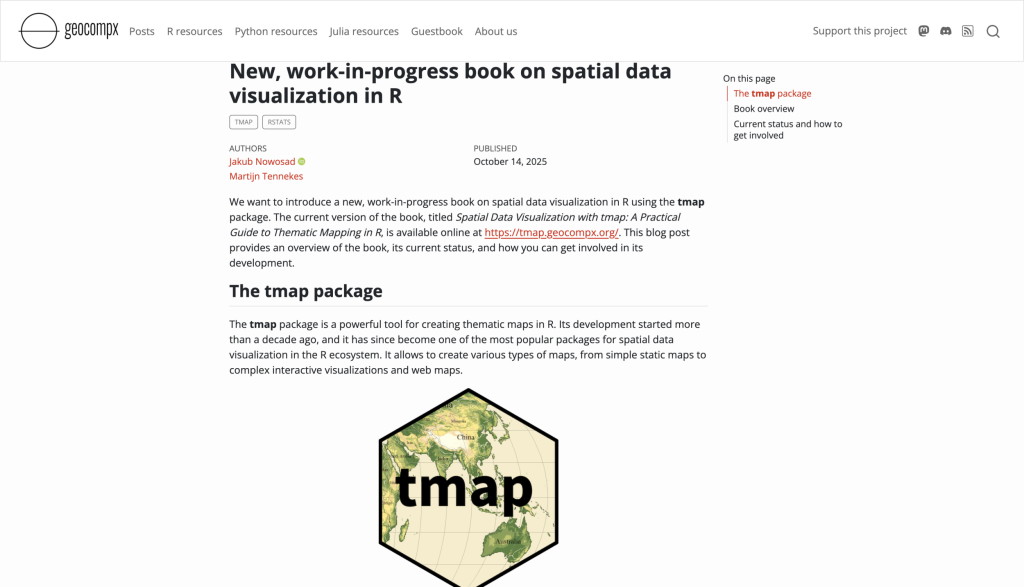
Jakub Nowosad and Martijn Tennekes announce a new work-in-progress book titled “Spatial Data Visualization with tmap: A Practical Guide to Thematic Mapping in R.” The {tmap} package has recently undergone significant changes with version 4.0, including improved defaults, expanded syntax, and new features like bivariate mapping. The book covers the complete process of thematic mapping, from loading spatial data to creating customized maps, and is already available online with the first three parts mostly complete.
AI-Powered Data Science in Positron
Ryan Johnson from Posit delivers a comprehensive 45-minute demonstration of AI capabilities in Positron, including both Positron Assistant and Databot. The demo walks through practical examples of using AI to debug errors, improve visualizations, create tables, and conduct exploratory data analysis. Ryan emphasizes how these tools are designed to keep data scientists in control while automating tedious tasks, with all suggestions provided as auditable code rather than black-box results.
If you enjoyed this issue of What’s New In R, please share it with a friend! And if they want to get What’s New in R directly in their inbox, they can sign up on the R for the Rest of Us website.
Got any ideas for resources I should feature in future issues of What’s New in R? Leave a comment below!
Sign up for the newsletter
Get blog posts like this delivered straight to your inbox.

You need to be signed-in to comment on this post. Login.