
What’s New in R: November 3, 2025
Welcome to this week’s edition of What’s New in R! This week, we’re featuring a tool for voice-controlled {ggplot2} creation, a beautiful TidyTuesday visualization of food insecurity trends, and a comprehensive guide to cleaning biodiversity data. Let’s dive in!
Voice control {ggplot2} with {ggbot2}
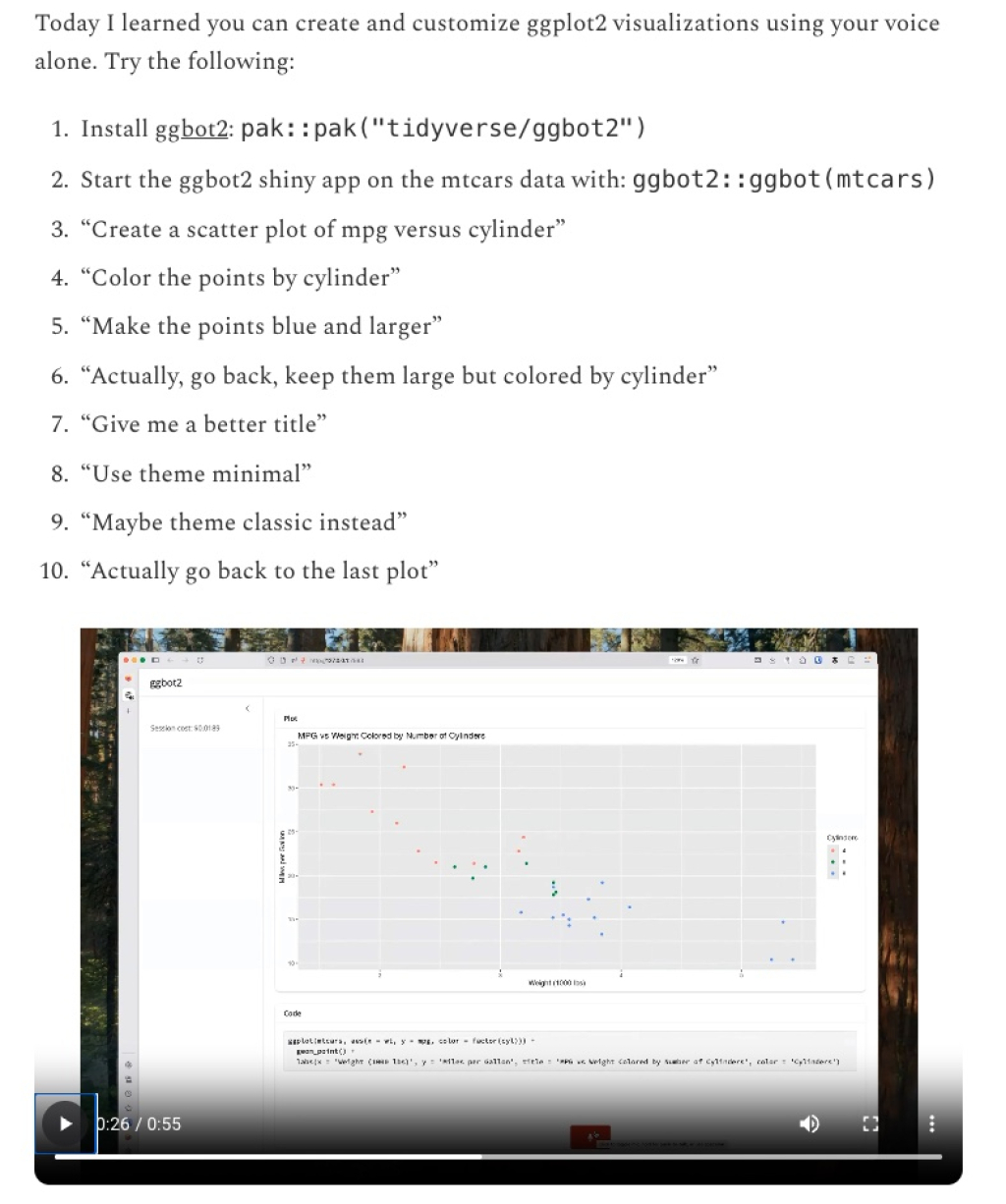
Stephen Turner demonstrates {ggbot2}, a remarkable new tool that allows you to create and customize {ggplot2} visualizations using only your voice. By launching a Shiny app with your data, you can speak commands like “create a scatter plot,” “color the points by cylinder,” or “use theme minimal,” and watch as {ggbot2} generates the corresponding code and visualization. This innovative package demonstrates how AI and voice recognition can make data visualization more accessible and interactive.
The World Started Tracking Severe Food Insecurity in 2016
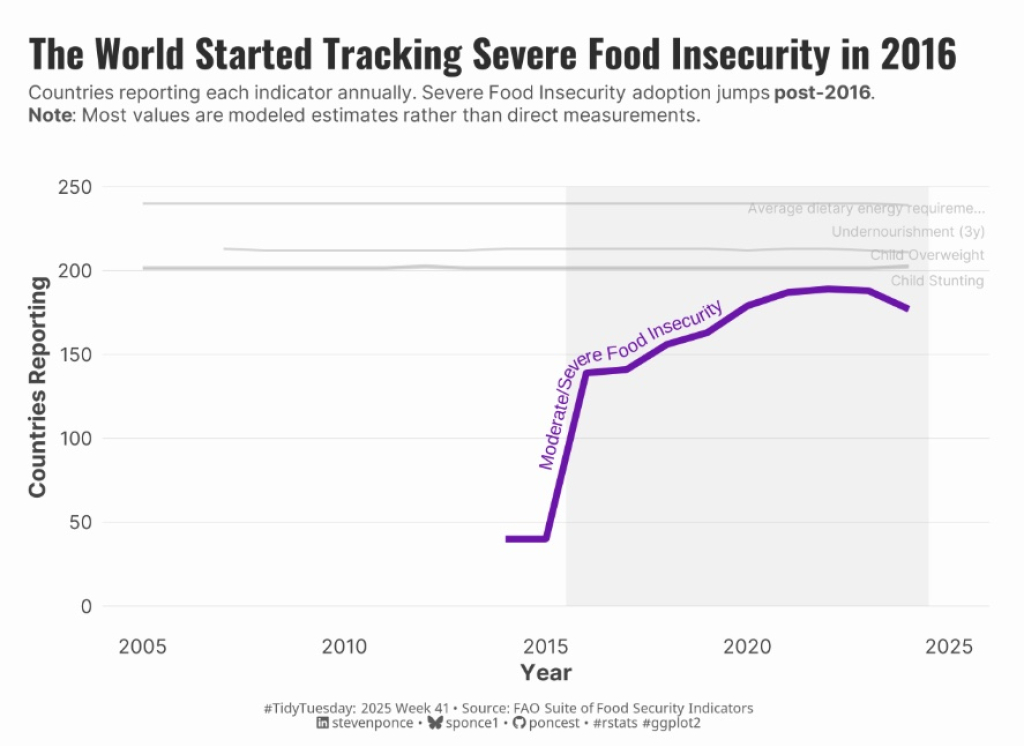
Steven Ponce creates a striking visualization for TidyTuesday showing how countries began tracking severe food insecurity indicators after 2016. The visualization effectively uses the {geomtextpath} package to display the increase in food insecurity tracking over time with elegant curved text labels. Even if food insecurity data isn’t your focus, this post demonstrates excellent techniques for creating polished, publication-ready visualizations with thoughtful design choices.
Cleaning Biodiversity Data in R
The Atlas of Living Australia team has created a comprehensive guide to cleaning biodiversity data in R. While focused on ecological data, this resource covers universal data cleaning challenges including handling duplicates, managing missing values, cleaning strings, working with dates, and validating taxonomic information. The practical, step-by-step approach makes it valuable for anyone working with messy data, regardless of their field, offering techniques that can be applied across domains.
If you enjoyed this issue of What’s New In R, please share it with a friend! And if they want to get What’s New in R directly in their inbox, they can sign up on the R for the Rest of Us website.
Got any ideas for resources I should feature in future issues of What’s New in R? Leave a comment below!
Sign up for the newsletter
Get blog posts like this delivered straight to your inbox.

You need to be signed-in to comment on this post. Login.