
What’s New in R: December 15, 2025
Welcome to this week’s edition of What’s New in R! This week, we’re featuring a comparison of mapping packages in R, an article on what makes R great for data science, and a talk on using LLMs to brand your data products. Let’s dive in!
tmap vs. ggplot2 for mapping
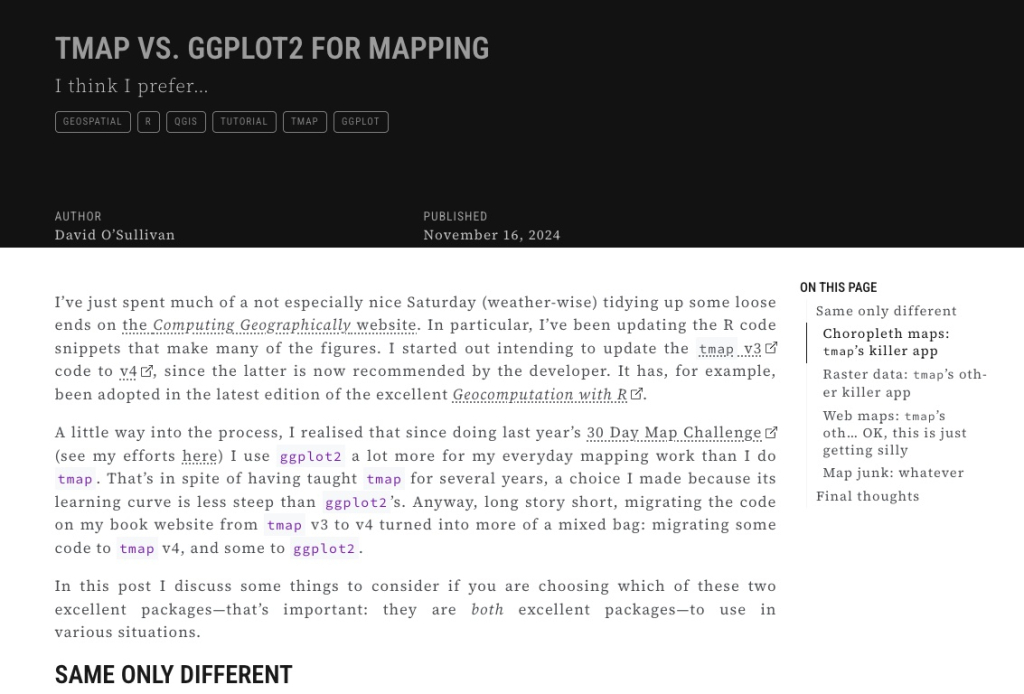
David O’Sullivan compares {tmap} and {ggplot2} for creating maps in R, examining four key areas: choropleth maps, raster data, web maps, and map elements like north arrows and scale bars. While this post is from 2024 (but new to me!), it provides valuable insights into when each package excels. O’Sullivan finds that {tmap} is superior for classified choropleth maps, raster visualization, and web mapping, while {ggplot2} offers advantages in its broader visualization ecosystem and familiar syntax. The post offers practical guidance for choosing between these two excellent mapping tools.
Python is not a great language for data science. Part 1
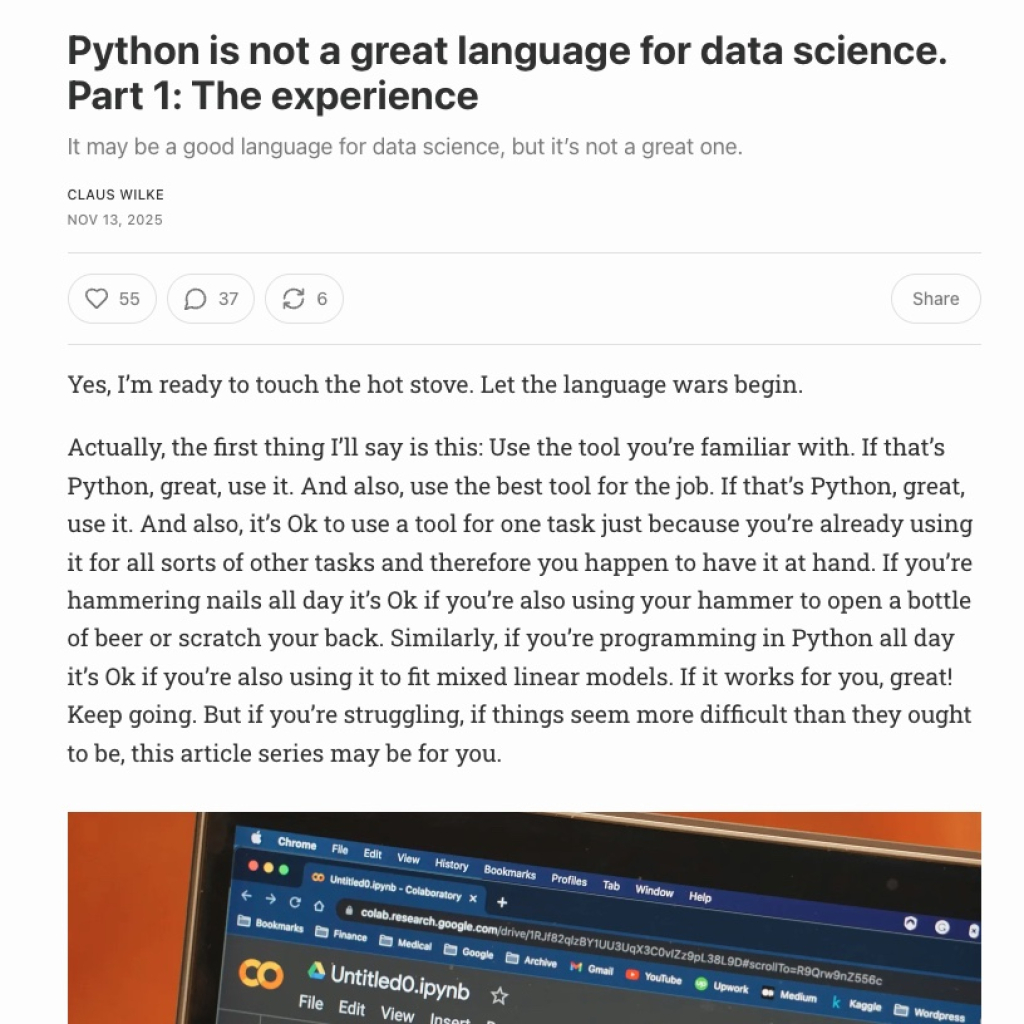
Claus Wilke examines why Python, while popular for data science, may not be the optimal choice for data work. Rather than fueling language wars, Wilke’s article offers a thoughtful analysis of what makes R particularly well-suited for data analysis, including its design philosophy, syntax for data manipulation, and visualization capabilities. The comparison highlights R’s strengths in exploratory data analysis and provides valuable perspective on the trade-offs between general-purpose and domain-specific programming languages.
Brand your docs, apps, and ggplots using LLMs
This talk by Umair Durrani from the R&AI conference introduces the {brandthis} package, which leverages large language models to help create brand.yml files for consistent theming across Quarto documents, Shiny apps, and {ggplot2} visualizations. The package streamlines the branding process by using LLMs to generate comprehensive brand files from images or company information, creating color palettes and typography settings that can be applied across all your R outputs. It’s an innovative approach to maintaining visual consistency without extensive design expertise.
If you enjoyed this issue of What’s New In R, please share it with a friend! And if they want to get What’s New in R directly in their inbox, they can sign up on the R for the Rest of Us website.
Got any ideas for resources I should feature in future issues of What’s New in R? Leave a comment below!
Sign up for the newsletter
Get blog posts like this delivered straight to your inbox.

You need to be signed-in to comment on this post. Login.