
What’s New in R: February 17, 2026
Welcome to this week’s edition of What’s New in R! This week, we’re featuring a guide to creating accessible line charts, a data visualization tutorial on GLP-1 drug search trends, and an introduction to using the {rv} package manager in Docker containers. Let’s dive in!
How to create a more accessible line chart
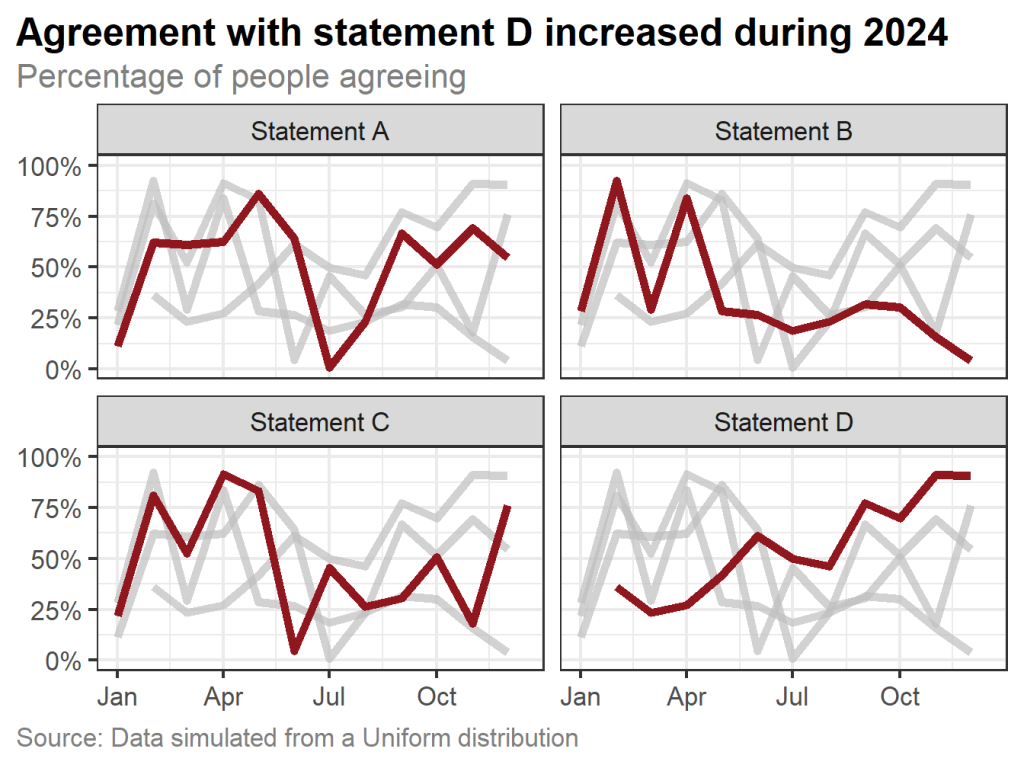
Nicola Rennie provides a comprehensive guide to making line charts more accessible, demonstrating that accessibility and aesthetics aren’t mutually exclusive. The post walks through transforming a default {ggplot2} line chart by increasing line widths and font sizes, choosing color-blind-friendly palettes like Okabe-Ito, adding direct labels instead of relying solely on legends, and using small multiples to reduce visual clutter when lines overlap. Rennie emphasizes that choosing the right chart type depends not just on your data structure but also on the specific values you’re plotting. The guide also covers writing effective alt text and using narrative titles to communicate your main message. It’s an essential resource for anyone who wants to create data visualizations that work for a wider audience.
The Prescription Takeover
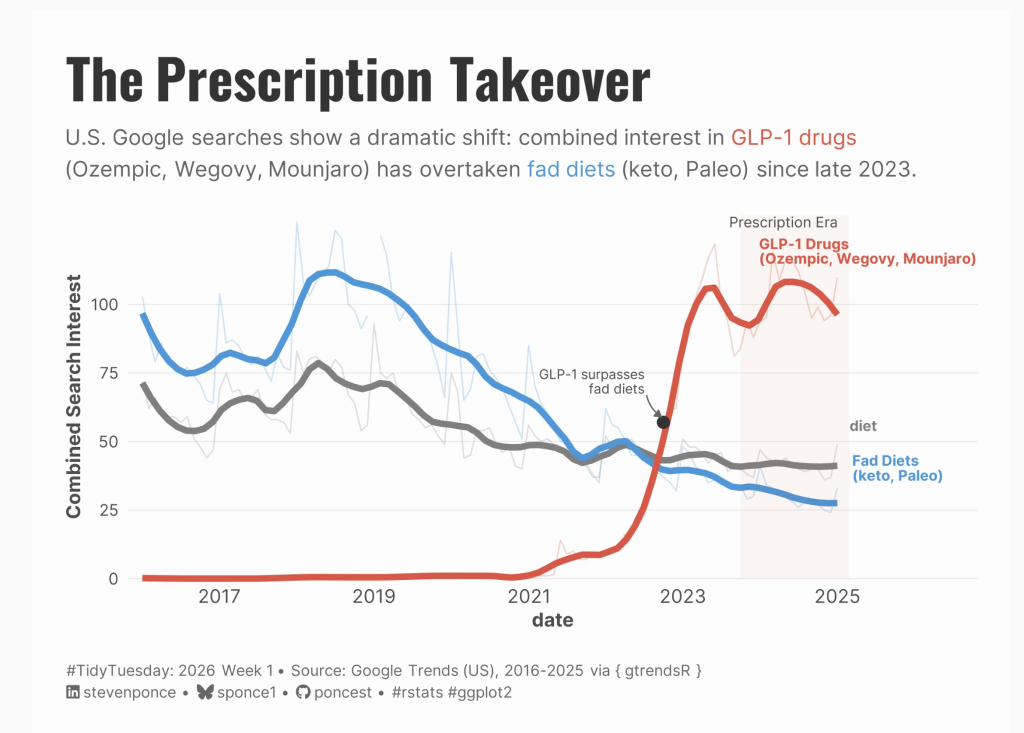
Stephen Ponce creates an annotated line chart showing how Google searches for GLP-1 drugs (Ozempic, Wegovy, and Mounjaro) have overtaken searches for fad diets like keto and Paleo since late 2023. The visualization is part of Ponce’s TidyTuesday contribution and demonstrates his consistently high-quality data visualization work. As with his other projects, Ponce shares the complete code and uses custom utility functions to maintain consistency across his visualizations. The chart includes thoughtful annotations that help tell the story of this dramatic shift in public interest from traditional diets to prescription weight-loss medications.
Using rv in a container
Iris Meredith explains how to use {rv}, a new command-line package manager for R written in Rust, within Docker containers. The {rv} package manager takes a declarative approach to dependency management, similar to {renv}, but Meredith argues it handles dependency resolution far better than existing tools. The post provides a practical Dockerfile example showing how to install system dependencies, copy the {rv} executable to the correct location (since containers don’t have the usual PATH setup), and sync packages using rproject.toml and rv.lock files. For teams working with R in containerized environments, this guide offers a modern solution to the perennial problem of ensuring everyone has the same package versions.
If you enjoyed this issue of What’s New In R, please share it with a friend! And if they want to get What’s New in R directly in their inbox, they can sign up on the R for the Rest of Us website.
Got any ideas for resources I should feature in future issues of What’s New in R? Leave a comment below!
Sign up for the newsletter
Get blog posts like this delivered straight to your inbox.

You need to be signed-in to comment on this post. Login.