
What’s New in R: February 9, 2026
Welcome to this week’s edition of What’s New in R! This week, we’re featuring a tutorial on adding directional markers to {leaflet} maps, a deep dive into visualizing microclimate data in Los Angeles, and a tip for enhancing Claude Code’s knowledge of your installed R packages. Let’s dive in!
Directional markers in R/leaflet
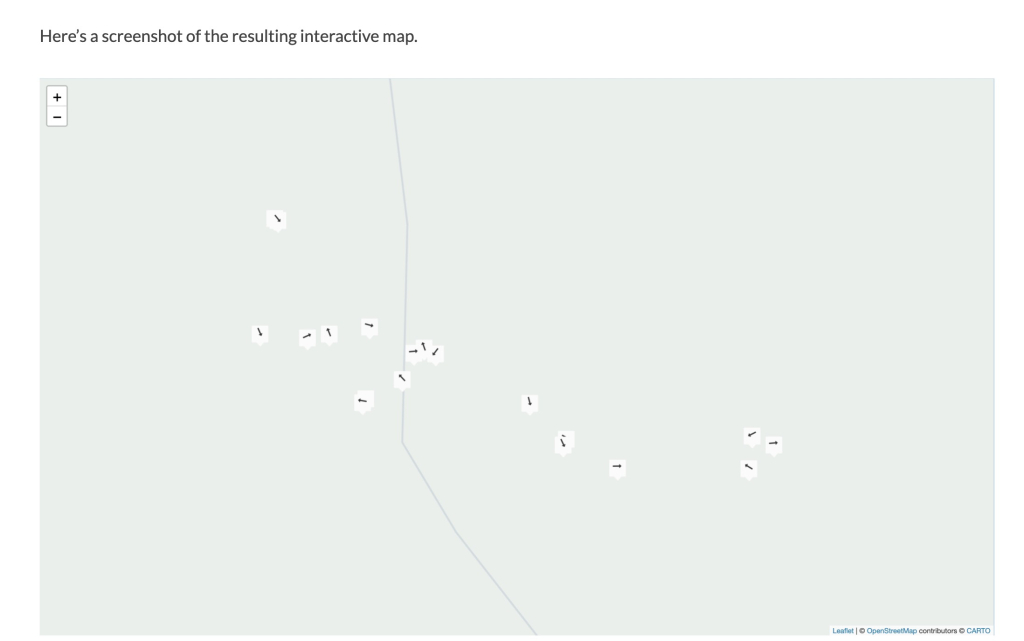
Neil Saunders demonstrates how to add directional markers to {leaflet} maps, specifically showing which direction a photographer was facing when taking geotagged photos. Using GPS metadata extracted with exiftool, Saunders shows how to use Font Awesome icons with custom rotation to create arrows that point in the correct direction. While the post is brief, it solves a specific problem that isn’t immediately obvious from leaflet documentation alone—namely, how to customize marker icons with rotation and ensure they display correctly in an interactive map. It’s a helpful tutorial for anyone working with directional geospatial data.
Visualizing the Los Angeles Microclimate
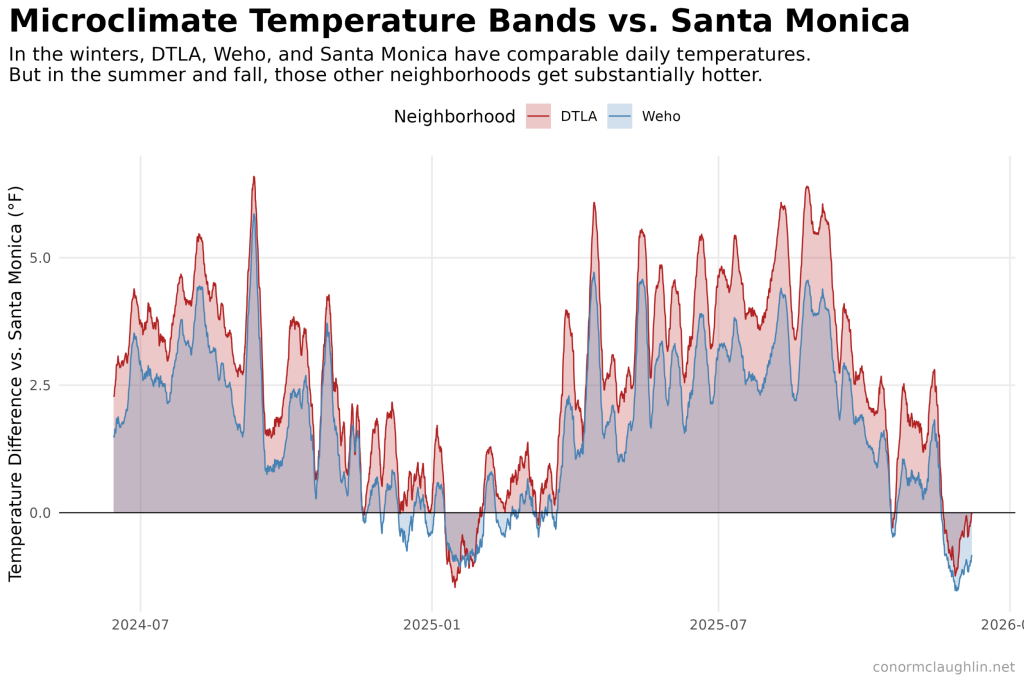
Conor McLaughlin documents his year-long journey to visualize temperature variations across Los Angeles neighborhoods—a project that involved two failed attempts at DIY data collection before finally turning to the Open-Meteo weather API. McLaughlin’s initial efforts involved deploying temperature sensors in trees and on stakes with radiation shields, but issues with shade, sensor placement, and data quality led to unusable results. The final analysis using API data confirms what many Southern California residents know anecdotally: coastal areas like Santa Monica are consistently cooler than inland neighborhoods like West Hollywood and Downtown LA, with the largest temperature differences occurring during afternoon and evening hours. The post is both an honest account of data collection challenges and a successful visualization of urban microclimate patterns.
Enhancing Claude Code with R Package Documentation
Sharon Machlis shares a tip for making Claude Code more effective when working with R: using the {btw} package to give the AI assistant access to documentation for any R packages you have installed. By setting up {btw} as an MCP (Model Context Protocol) server, Claude Code gains the ability to read help pages, vignettes, and package documentation on demand—similar to how you might look up ?function_name yourself. This means Claude Code can provide more accurate suggestions based on the actual packages in your environment rather than relying on its general training data. It’s a simple setup that can significantly improve the quality of AI-generated R code, especially when working with specialized or recently updated packages.
If you enjoyed this issue of What’s New In R, please share it with a friend! And if they want to get What’s New in R directly in their inbox, they can sign up on the R for the Rest of Us website.
Got any ideas for resources I should feature in future issues of What’s New in R? Leave a comment below!
Sign up for the newsletter
Get blog posts like this delivered straight to your inbox.

You need to be signed-in to comment on this post. Login.