
What’s New in R: March 23, 2026
Welcome to this week’s edition of What’s New in R! This week, we’re featuring a package for AI-assisted qualitative coding, a package for accessing real-time Google Maps traffic data, and a workshop on creating polished branded documents with Quarto. Let’s dive in!
{quallmer}
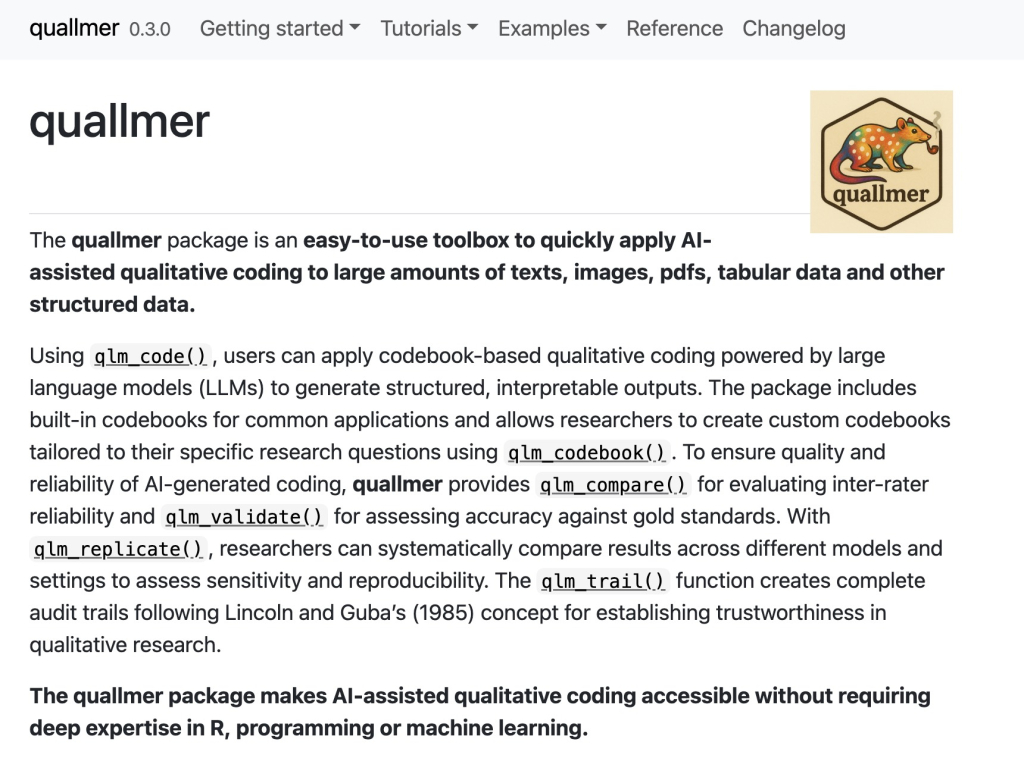
Seraphine F. Maerz and Kenneth Benoit introduce {quallmer}, an easy-to-use toolbox for applying AI-assisted qualitative coding to large amounts of texts, images, PDFs, and other data. Built on top of the {ellmer} package, it allows researchers to define codebooks with qlm_codebook() and then apply LLM-powered coding with qlm_code(). The package also includes tools for quality control: qlm_compare() assesses inter-rater reliability, qlm_validate() checks accuracy against gold standards, and qlm_replicate() compares results across different models and settings. For researchers who do qualitative analysis and want to explore how AI can assist without requiring deep machine learning expertise, {quallmer} is a compelling option.
{googletraffic}
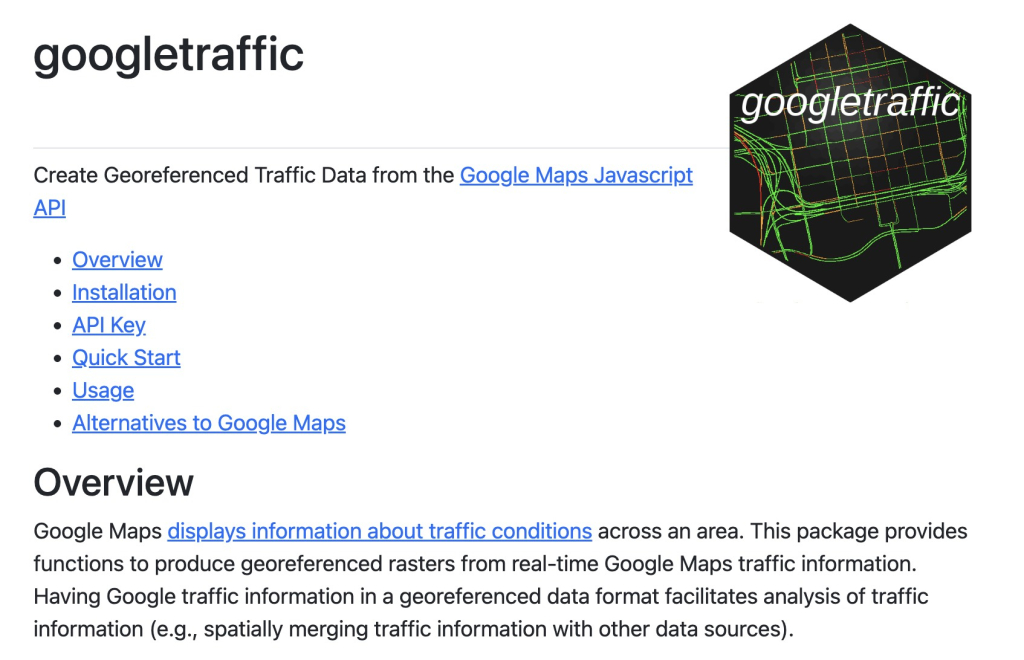
Robert Marty’s {googletraffic} package provides a way to pull real-time traffic data from the Google Maps JavaScript API into R as georeferenced rasters. The package translates Google’s four traffic congestion levels (no data, normal, slow, very slow) into pixel values that can be mapped and spatially joined with other data sources. You can query traffic data around a specific coordinate or use a polygon to define a larger area, with the package handling the necessary API calls automatically. It’s a niche but genuinely useful tool for anyone working on transportation research or urban analysis where actual road network conditions matter.
Creating Polished, Branded Documents with Quarto
Isabella Velásquez from Posit delivers a comprehensive R/Pharma workshop on creating polished, professionally branded documents using Quarto. The talk covers Quarto’s key outputs—documents, presentations, websites, dashboards, and PDFs—and focuses heavily on theming and branding, including the use of brand.yml to define and apply consistent visual identities (colors, fonts, logos) across all output formats from a single configuration file. Velásquez also demonstrates how a single Quarto source file can produce multiple output formats simultaneously, making it a powerful tool for reproducible, branded reporting workflows. Whether you’re creating reports for a pharma audience or just want your R output to look polished and on-brand, this nearly two-hour workshop is packed with practical guidance.
If you enjoyed this issue of What’s New In R, please share it with a friend! And if they want to get What’s New in R directly in their inbox, they can sign up on the R for the Rest of Us website.
Got any ideas for resources I should feature in future issues of What’s New in R? Leave a comment below!
Sign up for the newsletter
Get blog posts like this delivered straight to your inbox.

You need to be signed-in to comment on this post. Login.