
What’s New in R: April 20, 2026
Welcome to this week’s edition of What’s New in R! This week, we’re featuring a video walkthrough of Andrew Heiss’s Positron workflow, a collection of Claude skills for R users, and a skill for auto-generating _brand.yml files for Quarto. Let’s dive in!
How to make your data analysis life easier using Positron, Raycast, and Espanso
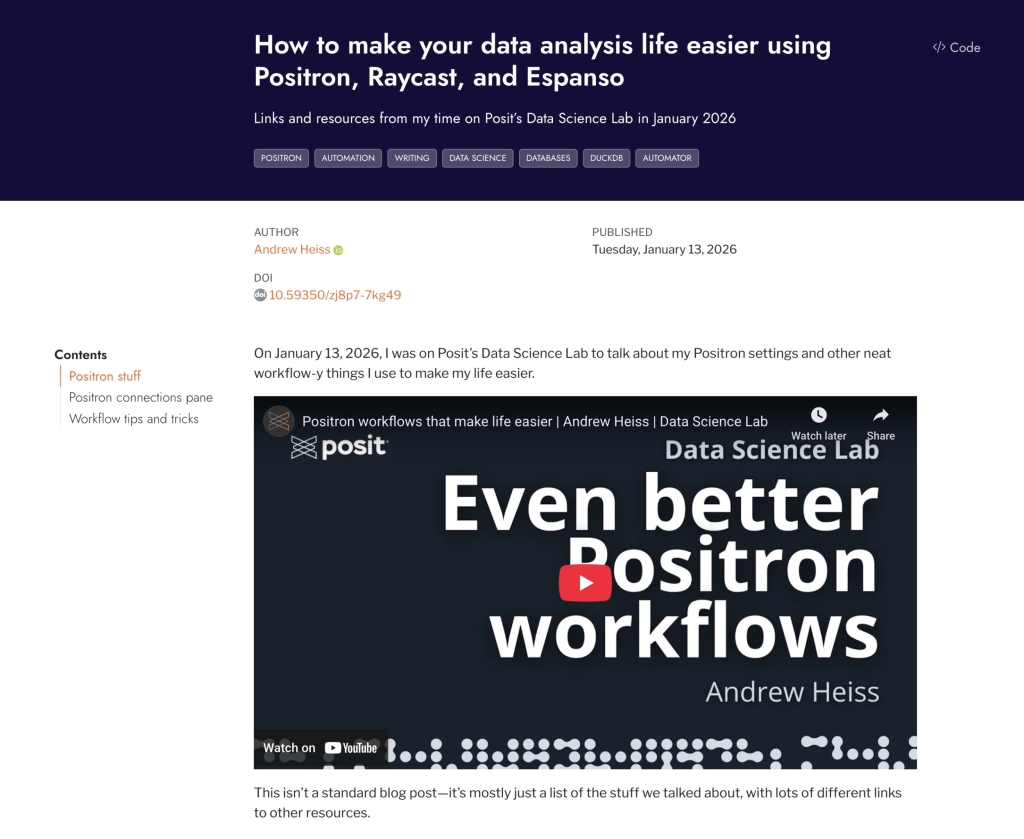
Andrew Heiss, professor at Georgia State University and one of the R community’s most thoughtful workflow tinkerers, sat down with Posit’s Data Science Lab to share the tools and configurations that make his data analysis life easier. The video covers his Positron setup in depth – including recommended extensions like Air, Rainbow CSV, and Spell Right — along with custom keyboard shortcuts and font choices for a smoother coding experience. He also shows how to use Raycast and Espanso for text expansion and shortcuts, and walks through connecting to DuckDB databases directly from Positron. Whether you’re new to Positron or a regular user, this is an excellent place to pick up some tips.
A Few Claude Skills for R Users
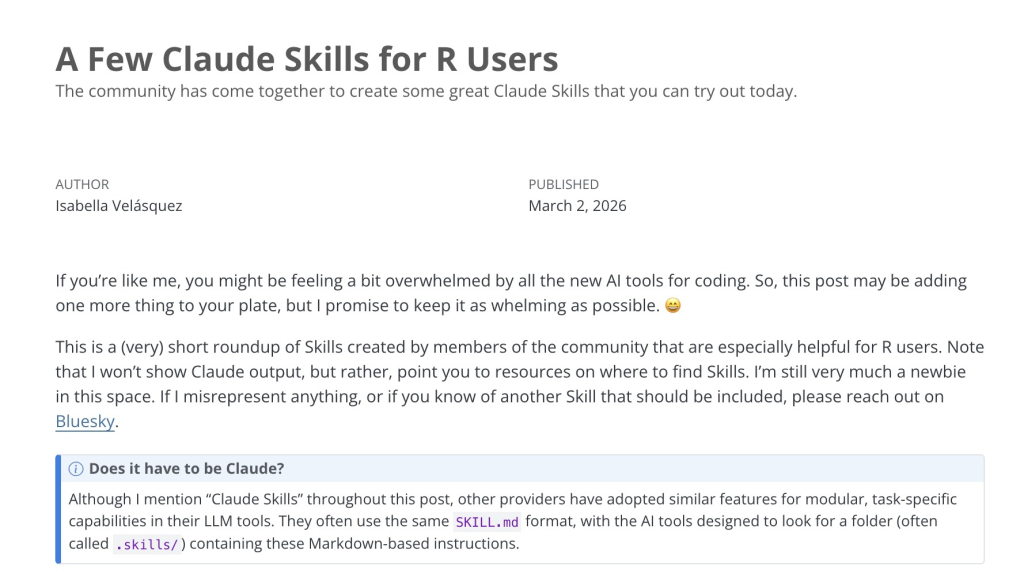
If you’ve been thinking about incorporating AI into your R workflow, Isabella Velásquez’s post is an excellent starting point. It rounds up several Claude Skills — reusable, pre-built commands that guide Claude Code through specific tasks tailored for R users — covering everything from writing modern tidyverse-style code to following Quarto best practices and R package release workflows. The skills highlighted include contributions from Alistair Bailey, Cat Hicks, and the Posit team, and the post explains how to install them from GitHub or set them up locally. Think of it as a set of ready-made prompts that make AI assistance more consistent and context-aware for R work.
A Claude Skill for _brand.yml, and sharing with Quarto 1.9
This post dives into one of the skills mentioned in the previous resource: a Claude Skill for automatically generating _brand.yml files. Stephen Turner demonstrates how the skill can take a website URL, an institutional style guide, or even a plain-language description of your organization’s branding—then extract hex codes, fonts, and logo references and produce a properly formatted YAML file that standardizes your organization’s look across Quarto outputs. Turner walks through an example using the UVA School of Data Science and also highlights a new Quarto 1.9 feature that lets you install brand configurations directly from GitHub with quarto use brand. It’s a small tool with a big impact if you produce a lot of branded Quarto documents.
If you enjoyed this issue of What’s New In R, please share it with a friend! And if they want to get What’s New in R directly in their inbox, they can sign up on the R for the Rest of Us website.
Got any ideas for resources I should feature in future issues of What’s New in R? Leave a comment below!
Sign up for the newsletter
Get blog posts like this delivered straight to your inbox.

You need to be signed-in to comment on this post. Login.