
Resources
This carefully curated collection of resources will help you find packages and learning resources to help you on your R journey.
resouRces
This content encompasses a comprehensive list of R-related educational materials, packages, tutorials, and datasets with projected dates ranging up to the year 2025. It includes various titles that focus on learning R programming, data analysis, data visualization, geospatial mapping, and statistical methods. Significant emphasis is placed on resources for learning R, such as introductions to R, books, courses, and video tutorials. Additionally, specific packages for data wrangling, statistical modeling, and visualization are mentioned, indicating the evolution and specialization of R's ecosystem to cater to diverse data science needs.
Go to Resource
RMarkdown Tutorials
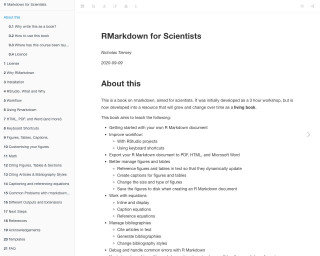
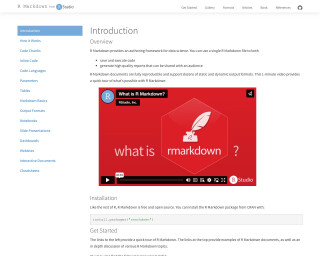
R Markdown provides an authoring framework for data science. It allows users to save and execute code, generate high-quality reports, and share them with an audience. R Markdown documents are fully reproducible and support various static and dynamic output formats. The R Markdown package is free and open source and can be installed from CRAN. The R Markdown website provides comprehensive documentation and resources for getting started with R Markdown.
Go to Resource
Rotate the damn plot
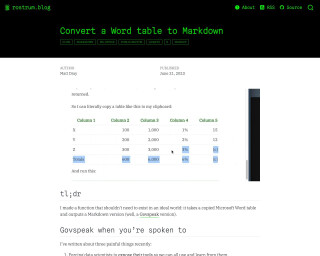
Ilya Kashnitsky criticizes common academic data visualization errors, advocating for simple improvements in graph readability. He suggests using dotplots over multi-category bar/column plots, recommending the placement of continuous variables on the x-axis and categorical variables on the y-axis. Kashnitsky outlines the method to digitize the data from a plot image using WebPlotDigitizer, and expresses disappointment in mainstream Large Language Models' (LLMs) failure to automate this task accurately. He also promises to document additional dataviz principles and to enhance educational content through his BlueSky social media account.
Go to Resource
rspatialdata
rspatialdata is an online resource featuring a compilation of data sources and tutorials aimed at helping users download and visualize spatial data using R. The platform is maintained by Paula Moraga and Laurie Baker and includes topics like administrative boundaries, Open Street Map data, population, climate variables (e.g., elevation, temperature, rainfall, humidity), vegetation, land cover, and health and environmental data (DHS, Malaria, Air Pollution, Species Occurrence). It's an open learning material with updates and community contributions, ideal for researchers and students in spatial analysis.
Go to Resource
rspatialdata
rspatialdata is an online resource featuring a compilation of data sources and tutorials aimed at helping users download and visualize spatial data using R. The platform is maintained by Paula Moraga and Laurie Baker and includes topics like administrative boundaries, Open Street Map data, population, climate variables (e.g., elevation, temperature, rainfall, humidity), vegetation, land cover, and health and environmental data (DHS, Malaria, Air Pollution, Species Occurrence). It's an open learning material with updates and community contributions, ideal for researchers and students in spatial analysis.
Go to Resource
RStudio Cloud Primer: Functions
Posit Cloud is a cloud-based platform for managing and analyzing data in the financial services industry.
Go to Resource

RStudio Cloud Primer: Iterate
Posit Cloud is a cloud platform that provides storage and computing resources for businesses and developers in order to store, process, and analyze large amounts of data.
Go to Resource

RStudio Cloud Primer: Tidy Your Data
Posit Cloud is a cloud-based platform that provides data storage and analysis tools for the R programming language.
Go to Resource
RStudio Cloud Primer: Visualize Your Data
Posit Cloud is a cloud-based platform for storing and managing business data.
Go to Resource
RStudio Cloud Primer: Work with Data
Posit Cloud is a cloud-based platform for managing and analyzing data using the R language.
Go to Resource